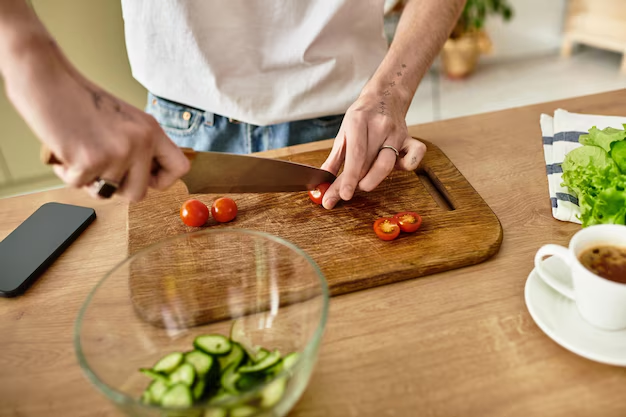
Healthy Meal Prep Ideas for the Work Week
Eating well during a busy work week rarely happens by accident. When you're short on time, tired, or just trying to get through the day, the easiest food choices aren't always the healthiest ones. That's the problem meal prepping is designed to solve — by putting in a focused block of effort once or twice a week, you build a ready supply of nutritious meals and ingredients that make good choices the default, not the exception.
This guide walks through what effective meal prep actually looks like, which approaches work for different lifestyles, and what factors should shape your own strategy.
What Is Meal Prep, Really?
Meal prep is the practice of preparing food in advance — partially or fully — so it's ready when you need it. It's not one single method. Depending on your schedule, cooking ability, dietary needs, and storage space, it can take several different forms:
- Full meal prep: You cook complete meals in advance and portion them into containers. Lunch and dinner are ready to grab and reheat.
- Ingredient prep: You cook or chop individual components — grains, proteins, roasted vegetables — and assemble meals throughout the week.
- Batch cooking: You make large quantities of one or two dishes (like a soup, stew, or grain salad) that carry you through several days.
- Partial prep: You handle the time-consuming tasks in advance (marinating proteins, pre-chopping vegetables) but still do some cooking each day.
None of these is universally better. The right approach depends on how much variety you want during the week, how much time you can dedicate to prep, and what your kitchen setup allows.
Building a Nutritionally Balanced Prep
Healthy meal prep isn't just about cooking ahead — it's about cooking ahead thoughtfully. Most nutrition frameworks emphasize a few core building blocks that translate well to batch cooking:
| Component | Role | Prep-Friendly Examples |
|---|---|---|
| Lean proteins | Satiety, muscle maintenance | Grilled chicken, hard-boiled eggs, canned or cooked legumes, baked fish, tofu |
| Complex carbohydrates | Sustained energy | Brown rice, quinoa, farro, sweet potatoes, oats |
| Vegetables | Fiber, micronutrients | Roasted broccoli, sliced bell peppers, spinach, shredded cabbage |
| Healthy fats | Nutrient absorption, fullness | Avocado (add fresh), olive oil dressings, nuts and seeds |
The goal is to have options from each category ready to combine in different ways. A base of cooked quinoa, for example, can become a grain bowl with roasted vegetables one day and a side dish with grilled chicken the next. That flexibility helps prevent the midweek fatigue that derails a lot of prep plans.
Practical Meal Prep Ideas by Meal Type 🥗
Breakfasts
Mornings are where prep pays off fastest. A few reliable options:
- Overnight oats — combine rolled oats with milk or a dairy-free alternative, chia seeds, and fruit in individual jars. Ready to grab straight from the refrigerator.
- Egg muffins — whisked eggs with vegetables and cheese baked in a muffin tin. These reheat quickly and keep well for several days.
- Chia pudding — made in batches, nutritionally dense, and easy to vary with different toppings.
- Pre-portioned smoothie packs — freeze individual bags of fruit and greens so blending takes under two minutes.
Lunches
This is where most people feel the biggest benefit from prep. A few structures that work well:
- Grain bowls — a cooked grain base with a protein, roasted or raw vegetables, and a dressing or sauce portioned separately so it doesn't make things soggy.
- Mason jar salads — layered with dressing at the bottom, hearty vegetables in the middle, and delicate greens on top. They stay fresh for several days when assembled correctly.
- Wraps or lettuce cups — using prepped proteins and vegetables, assembled fresh in about two minutes.
- Soup or stew — made in large batches, portioned into containers, and frozen in batches you pull out as needed.
Dinners
Prepping for weeknight dinners is often about reducing active cooking time rather than eliminating it entirely:
- Marinated proteins — chicken, fish, or tofu marinated and stored raw, ready to cook quickly on a weeknight.
- Sheet pan components — vegetables cut and ready to roast while a protein cooks.
- Pre-made sauces — a homemade tomato sauce, curry base, or stir-fry sauce stored in jars can turn simple ingredients into a full meal in under 20 minutes.
Snacks Worth Prepping
Unplanned snacking often undermines an otherwise solid eating strategy. Prepping snacks removes the friction:
- Portioned nuts or trail mix in small containers
- Sliced vegetables with hummus (prepped in advance, portioned daily)
- Hard-boiled eggs
- Greek yogurt parfaits layered with fruit and granola
- Energy balls made from oats, nut butter, and seeds — they keep well refrigerated for a week or more
Storage, Safety, and Shelf Life 🧊
Preparing food in advance only works if it's stored properly. A few general principles:
- Most cooked proteins and grains stay safe and palatable for roughly three to four days in the refrigerator. Beyond that, quality declines and food safety becomes a consideration.
- Soups, stews, and cooked legumes are particularly well-suited to freezing, extending their usable life significantly.
- Salad greens and cut fruit have the shortest shelf life and are generally best prepped in smaller quantities more frequently.
- Airtight containers make a meaningful difference in how long prepped food stays fresh. Glass containers are durable and don't absorb odors; BPA-free plastic containers are lighter and easier to transport.
- Label containers with the prep date — it removes the guesswork mid-week.
Food safety guidelines from public health authorities recommend keeping cooked food out of the temperature danger zone (between roughly 40°F and 140°F / 4°C and 60°C), refrigerating within two hours of cooking, and when in doubt, discarding rather than risking illness.
What Shapes a Successful Meal Prep Strategy
There's no single template that works for everyone. The variables that should guide your approach include:
Dietary goals and restrictions. Someone managing blood sugar will think about the glycemic impact of carbohydrate choices differently than someone focused on athletic performance or weight management. People with food allergies, intolerances, or specific medical conditions should factor those needs in directly — and consult a registered dietitian if navigating complex requirements.
Household size. Cooking for one means smaller batches and more variety risk. Cooking for a family means scale, but also potentially more varied preferences to accommodate.
Available time. A two-hour Sunday prep session works for some people. Others do better with a shorter Sunday prep and a mid-week refresh on Wednesday evening.
Kitchen equipment. An Instant Pot, slow cooker, or sheet pans that can handle high volume change what's practical to batch cook.
Appetite for repetition. Some people are comfortable eating the same lunch four days running. Others need variety to stay on track. Building flexibility into your prep — through modular components rather than pre-assembled identical meals — addresses this directly.
Making It Sustainable Over Time ✅
The most nutritious meal prep plan is the one you'll actually maintain. A few principles that tend to support long-term consistency:
- Start smaller than you think you need to. Prepping one or two meal types rather than every meal reduces overwhelm and wasted food while you find your rhythm.
- Rotate recipes seasonally. Using produce that's in season keeps variety high and cost manageable.
- Account for planned flexibility. If you know you'll eat out twice this week, prep for three days, not five. Wasted food is demotivating and expensive.
- Treat prep as a system, not a diet. The goal is reducing friction around healthy choices — not perfection. A week where you prepped breakfasts and lunches but ate a takeout dinner twice is still a successful week.
What "healthy" looks like in practice varies significantly by person — based on individual health status, activity level, metabolic factors, and dietary goals. The framework above describes how most nutrition professionals approach balanced eating, but your specific needs may call for different emphases. A registered dietitian can assess your individual situation in ways a general guide cannot.