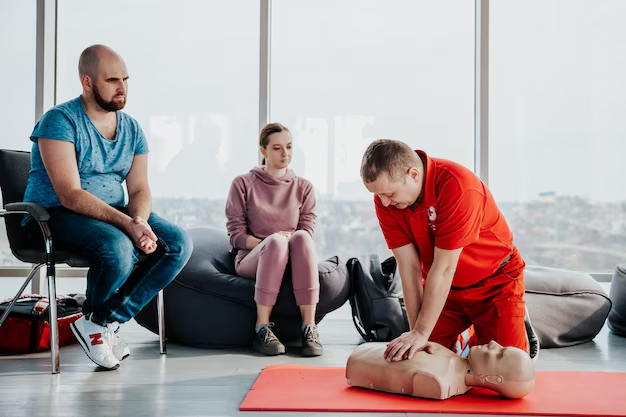
First Aid & Safety: A Complete Guide to Understanding Emergency Preparedness and Response
First aid and safety knowledge sits at an unusual intersection — it's information most people hope they'll never need, but that can matter enormously when they do. Whether you're thinking about household hazards, workplace protocols, outdoor emergencies, or preparing for unexpected medical events, understanding what first aid covers and how safety practices work gives you a foundation for making informed decisions. This guide maps the full landscape of the topic, from core concepts to the variables that shape outcomes.
What First Aid and Safety Actually Cover
First aid refers to the immediate care given to a person who is injured or suddenly ill, before professional medical help arrives or becomes available. Safety, in this context, refers to the practices, environments, and preparations that reduce the likelihood of injury or illness occurring in the first place — and that improve outcomes when they do.
These two areas are closely linked. Strong safety practices reduce how often first aid is needed. Accessible, well-understood first aid knowledge improves outcomes when accidents or medical emergencies happen despite precautions.
The scope of first aid and safety is broad. It includes responding to traumatic injuries like cuts, burns, fractures, and head injuries; recognizing and responding to medical emergencies such as cardiac arrest, stroke, allergic reactions, and diabetic crises; handling environmental emergencies like heat exhaustion, hypothermia, and drowning; and managing choking, poisoning, and seizures. On the safety side, it encompasses hazard identification, risk reduction, emergency planning, and preparedness for both everyday and large-scale events.
How First Aid Works: The Core Mechanisms
The underlying logic of first aid is time. Many medical emergencies involve processes — oxygen deprivation, blood loss, swelling, or toxin absorption — that worsen the longer they continue unchecked. First aid is not treatment in the clinical sense; it's a set of immediate actions designed to stabilize a situation, slow deterioration, and preserve the window for professional care to be effective.
🫀 Cardiopulmonary resuscitation (CPR) is one of the clearest examples of this principle. When the heart stops, the brain begins experiencing damage within minutes from lack of oxygen. CPR — chest compressions and rescue breaths — maintains some circulation artificially, buying time until a defibrillator or advanced care can restore normal rhythm. Research consistently shows that bystander CPR, even when imperfect, improves survival rates in cardiac arrest. The effectiveness depends on how quickly it starts, how consistently it's performed, and the cause of the arrest, among other factors.
Bleeding control follows similar logic. Significant blood loss reduces the body's ability to maintain blood pressure and oxygen delivery. Direct pressure slows or stops bleeding, giving the body time to begin clotting. In severe cases, tourniquets — once considered a last resort — are now recognized by emergency medicine organizations as appropriate early interventions for life-threatening limb bleeding when applied correctly.
Airway management is another foundational concept. Many emergencies, from anaphylaxis to unconsciousness, involve compromised breathing. Simple positioning changes — placing an unconscious person on their side, tilting the head to open the airway — can maintain breathing until help arrives.
Safety practices work through a different mechanism: anticipating and reducing exposure to hazards before harm occurs. This includes engineering controls (cabinet locks, guardrails, fire suppression systems), behavioral practices (following safe lifting techniques, wearing protective equipment), and preparedness planning (having emergency kits, knowing evacuation routes, understanding when to call emergency services).
The Variables That Shape Outcomes ⚠️
First aid and safety outcomes are rarely uniform. A wide range of factors influences what works, what's appropriate, and what results look like in any given situation.
The nature and severity of the emergency is the most obvious variable. A minor cut and a major arterial bleed both involve first aid, but the appropriate responses, urgency levels, and outcomes differ enormously.
The responder's training and experience plays a significant role. Formal first aid and CPR training, certified through recognized programs, improves the accuracy, confidence, and effectiveness of responses. That said, some interventions — bystander CPR being the most studied — are still meaningfully helpful when performed by untrained individuals, particularly if guided by emergency dispatch operators.
Time to professional care is critical in many emergencies. In urban settings with fast emergency response times, the window first aid needs to cover is shorter. In rural or remote environments, wilderness first aid principles — which account for prolonged care before evacuation — become more relevant. The appropriate response in a situation where emergency services are 5 minutes away may differ from one where they're 90 minutes away.
The age and health status of the person affected influences both the likelihood of certain emergencies and the appropriate response. Infant CPR technique differs from adult CPR. Older adults may have additional medical complexities. Children have different choking risks and airway considerations.
Available equipment and supplies shapes what's possible. The presence of an automated external defibrillator (AED) dramatically changes cardiac arrest outcomes. A well-stocked first aid kit enables interventions that bare hands cannot. Safety equipment — smoke detectors, carbon monoxide alarms, personal protective equipment — changes risk profiles.
Environment and context matters throughout. Home, workplace, school, vehicle, and wilderness settings each carry distinct hazards, resources, and regulatory frameworks. Occupational safety standards, for example, vary significantly by industry and jurisdiction. Outdoor settings introduce environmental hazards that indoor contexts don't.
| Variable | Why It Matters |
|---|---|
| Type and severity of injury or illness | Determines which interventions are appropriate |
| Responder training level | Affects accuracy, confidence, and effectiveness |
| Time to professional care | Shapes urgency and scope of first aid needed |
| Age and health status of the person affected | Influences technique and complication risk |
| Available equipment | Expands or limits possible interventions |
| Setting and environment | Introduces context-specific hazards and constraints |
The Spectrum of Situations and Profiles
🏠 First aid and safety needs look different depending on who you are and what contexts you navigate. A parent of young children faces distinct hazard profiles — poisoning prevention, choking risks, drowning prevention — compared to someone working in construction, where fall protection, machinery safety, and crush injury response dominate. An outdoor enthusiast in remote terrain needs a different knowledge base than someone whose primary concern is household and community emergencies.
People's preparedness levels also span a wide range. Some individuals have completed certified first aid and CPR training and recertify regularly. Others have no formal training but carry some general knowledge. Training programs through recognized health and safety organizations vary in depth, from brief CPR-only courses to multi-day wilderness first aid or advanced first responder certifications.
Cultural, economic, and geographic factors affect access to training, quality emergency supplies, and the speed of emergency services — all of which feed into how preparedness needs and realistic outcomes differ across communities.
Key Subtopics Within First Aid and Safety
Emergency response basics and CPR form the foundation most people think of first. This area covers how to assess an emergency scene, how to activate emergency services effectively, and how to perform CPR on adults, children, and infants. It also includes AED use, which is now widely taught alongside CPR and has strong evidence supporting its effectiveness in shockable cardiac rhythms when deployed quickly.
Wound care and bleeding control addresses everything from everyday cuts and scrapes to more serious lacerations and traumatic bleeding. Understanding when wound closure is needed, how to manage infection risk, and when a wound requires professional evaluation are all part of this area.
Burns, fractures, and musculoskeletal injuries cover some of the most common serious injuries people encounter. Burn classification, cooling protocols, and when burns require emergency care are frequently misunderstood. Fracture management focuses on immobilization, not diagnosis — knowing how to stabilize a suspected break until imaging is available.
Medical emergencies: recognition and response covers events like heart attack, stroke, anaphylaxis, diabetic emergencies, and seizures. Recognizing the signs of these conditions and knowing the immediate steps — including when and how to use an epinephrine auto-injector in anaphylaxis — are distinct skills from general first aid.
Choking and airway emergencies address one of the most time-sensitive situations a bystander can face. The approaches differ depending on whether the person is conscious or unconscious, adult or infant, and whether obstruction is partial or complete.
Environmental emergencies include heat-related illness, cold exposure and hypothermia, lightning strikes, altitude sickness, and water-related emergencies. These are particularly relevant for people who spend time outdoors, work in extreme temperatures, or live in regions prone to specific weather events.
Poisoning and toxic exposure spans accidental ingestion, chemical exposure, medication overdose, and carbon monoxide poisoning. Response in these situations often involves contacting poison control services, which can provide real-time guidance calibrated to the substance, amount, and person involved.
Home and workplace safety encompasses hazard identification, prevention strategies, and preparedness planning. This includes fire safety, fall prevention (particularly significant for older adults), childproofing, safe storage of medications and chemicals, and workplace-specific safety protocols and regulatory requirements.
Emergency preparedness and disaster readiness 🎒 focuses on planning before emergencies occur — assembling emergency supply kits, establishing family communication plans, understanding community evacuation routes, and preparing for events like earthquakes, floods, or extended power outages. Public health agencies and emergency management organizations provide frameworks for this type of planning, though what's most relevant depends heavily on geography and individual circumstances.
First aid training and certification is its own subtopic. Understanding what different certification levels cover, how often recertification is recommended, and what formats (in-person, blended, online) are recognized for different purposes helps people make informed decisions about their own training. Research generally supports that hands-on practice improves skill retention more than knowledge-only formats, though the specifics of what training is appropriate depends entirely on a person's role and needs.
Understanding Whose Guidance to Follow
First aid guidelines are not static. Major health and safety organizations — including those that establish CPR and emergency care standards — periodically update their recommendations as research accumulates. Staying connected to current guidance from recognized authorities matters, particularly for techniques like CPR compression depth and rate, which have changed over time based on updated evidence.
For situations involving poisoning, possible stroke or heart attack, or any emergency where someone's condition is unclear or deteriorating, emergency services and professional medical evaluation are the appropriate resource. First aid operates in the gap before that care is available — it's not a substitute for it, and understanding that boundary is part of understanding the field itself.
What first aid and safety knowledge ultimately provides is a framework for acting thoughtfully under pressure, reducing risk before emergencies occur, and understanding enough to recognize when a situation exceeds what bystander intervention can address. What that means in practice — which skills to prioritize, which hazards to focus on, which training level makes sense — depends on the specifics of each person's life, environment, and responsibilities.