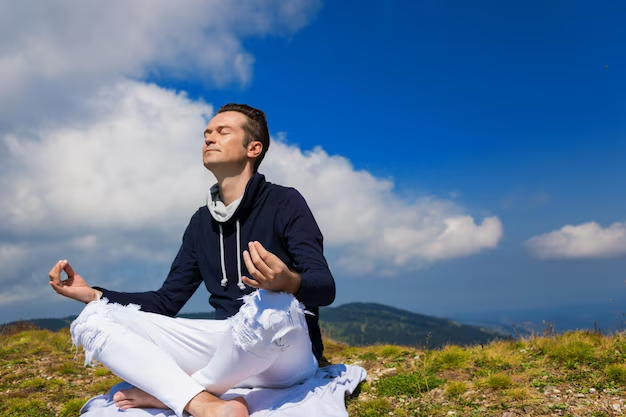
Breathing Exercises for Stress Relief: What Works, Why, and How to Find Your Fit
When stress hits, your breath changes — usually before you even notice it. It gets shallow, faster, and moves up into your chest. That shift is part of your body's threat response, and it's automatic. What most people don't realize is that the relationship runs both ways: you can use your breath intentionally to signal safety to your nervous system, not just the other way around.
Breathing exercises are one of the few stress-relief tools that are free, portable, and backed by a clear physiological rationale. But not every technique works the same way for every person, and understanding the landscape helps you make smarter choices about what to try.
Why Controlled Breathing Affects Stress
Your autonomic nervous system has two modes that are relevant here: the sympathetic ("fight or flight") and the parasympathetic ("rest and digest"). Stress activates the sympathetic side — heart rate rises, muscles tense, digestion slows.
The vagus nerve is a major pathway connecting your brain to your body, and breathing directly influences it. Slow, extended exhales stimulate the vagus nerve, which in turn activates the parasympathetic response. This is why breathing exercises tend to feel calming rather than energizing — they're essentially nudging your nervous system away from alarm mode.
The core variables that influence how effective this is for any given person include:
- Their baseline stress level — acute situational stress vs. chronic ongoing anxiety may respond differently
- How practiced they are with the technique
- Whether any underlying conditions (respiratory, cardiac, anxiety disorders) affect their experience
- The specific technique and how it's applied
None of this is magic, and it isn't a substitute for professional mental health care when that's what someone needs. But as a practical, on-demand tool, controlled breathing has a solid physiological foundation.
The Most Common Breathing Techniques 🌬️
Different techniques emphasize different mechanics — exhale length, breath holds, nostril use, rhythm — and they produce somewhat different effects. Here's a comparison of the most widely used approaches:
| Technique | Basic Method | Primary Effect | Good For |
|---|---|---|---|
| Diaphragmatic (belly) breathing | Breathe into your belly, not your chest | General relaxation, corrects shallow breathing | Everyday stress, beginners |
| 4-7-8 breathing | Inhale 4 counts, hold 7, exhale 8 | Deep calm, slows heart rate | Pre-sleep anxiety, acute stress spikes |
| Box breathing | 4 counts each: inhale, hold, exhale, hold | Balance, mental reset | High-pressure moments, focus |
| Alternate nostril breathing | Alternate closing each nostril while breathing | Balancing, centering | Mental clarity, mild anxiety |
| Resonance (coherent) breathing | ~5–6 breaths per minute | Nervous system regulation | Sustained stress, practice-based use |
| Extended exhale breathing | Exhale longer than inhale (e.g., 4 in, 6–8 out) | Activates parasympathetic response | Anxiety, tension relief |
These aren't competing options — many people use different techniques in different contexts. Box breathing, for example, is often used in high-stakes, time-pressured moments (it has roots in military and first-responder training). Resonance breathing, on the other hand, tends to be practiced regularly as a longer-term habit.
Diaphragmatic Breathing: The Foundation
Most breathing exercises build on one core skill: diaphragmatic breathing, sometimes called belly breathing or abdominal breathing.
Most adults under stress breathe shallowly into the upper chest. Diaphragmatic breathing re-engages the diaphragm — the dome-shaped muscle beneath your lungs — which allows for fuller oxygen exchange and directly supports the calming response.
How to practice it:
- Sit or lie down in a comfortable position.
- Place one hand on your chest and one on your belly.
- Inhale slowly through your nose, aiming to expand your belly (not your chest).
- Exhale slowly through your mouth or nose.
- The hand on your chest should stay relatively still; the hand on your belly should rise and fall.
This sounds simple, and it is — but it often takes deliberate practice before it feels natural, especially if shallow breathing has become habitual.
How Often and How Long Does It Take to Work?
This varies considerably between individuals, and there's an important distinction between immediate effects and longer-term adaptation.
Short-term: Many people notice a meaningful shift in how they feel within a few minutes of slow, controlled breathing. The physiological response can be relatively rapid — though individual experiences differ.
Longer-term: Regular practice appears to build a kind of baseline resilience, making it easier to shift out of stress states over time. People who practice consistently often report that the techniques become more effective and feel more automatic. How quickly that develops depends on how regularly someone practices, their stress context, and individual differences in nervous system responsiveness.
A few minutes daily is the most commonly recommended starting point — but what actually works for you depends on your schedule, your stress patterns, and your goals.
Who Benefits Most — and Who Should Be Careful 🩺
Breathing exercises are generally considered low-risk and accessible, but certain situations call for more caution:
- People with anxiety disorders may occasionally find breath focus increases rather than decreases their anxiety, particularly if they become hyperaware of their breathing. Working with a therapist who can guide the practice is often valuable in these cases.
- People with respiratory conditions (asthma, COPD, etc.) should check with a healthcare provider before practicing techniques involving breath holds or extended exhalations.
- People with cardiovascular conditions should similarly get professional guidance, as some techniques do affect heart rate.
- People experiencing trauma may find certain body-focused practices activating rather than calming. Trauma-sensitive approaches exist, and a qualified mental health professional can help tailor the practice.
For most generally healthy adults dealing with everyday stress, breathing exercises are a safe starting point. But the further someone's situation is from "typical," the more their specific profile matters.
Fitting Breathing Exercises Into Real Life
One reason breathing exercises get overlooked is that people assume they need a quiet room and 20 minutes of uninterrupted time. In practice, even brief, informal use — a few slow breaths before a difficult conversation, or a short box-breathing reset after a stressful meeting — can make a difference.
Some common entry points:
- Morning routine — a few minutes of slow breathing before the day begins can set a calmer baseline
- Transition moments — between tasks, before calls, when switching from work to home
- Before sleep — techniques with extended exhales or holds (like 4-7-8) are frequently used for pre-sleep anxiety
- On demand — when you feel stress rising, a few slow exhales can interrupt the escalation
Apps, guided recordings, and wearables all exist to assist with pacing and practice — the quality and usefulness of these varies, and none of them are essential. A mental health professional or qualified breathwork instructor can also provide structured guidance if you want more than self-directed practice.
What to Evaluate Before You Start
You don't need to have everything figured out before trying a breathing exercise — the barrier to entry is genuinely low. But a few questions are worth sitting with:
- What am I trying to address? Everyday work stress, chronic anxiety, sleep problems, and acute panic moments may call for different approaches.
- Do I have any health conditions that might affect which techniques are appropriate?
- Am I currently working with a mental health professional? If so, they can help integrate breathing practices into a broader treatment picture.
- What's realistic for me to sustain? A technique you'll actually use regularly is more valuable than one that seems more effective on paper but never gets practiced.
Breathing exercises aren't a solution for everyone or every situation — but for many people, they're one of the most accessible, evidence-informed tools available for managing day-to-day stress. Understanding how they work helps you use them more deliberately.