Home Workouts: What the Research Shows and What Actually Shapes Results
Training at home has moved well beyond a convenience option or a stopgap for people without gym access. For a significant portion of people, it has become a primary — and in some cases preferred — approach to building fitness. Understanding what home-based training can realistically accomplish, what it cannot, and which factors shape outcomes requires going past the surface-level question of whether it "works."
This page covers how home workouts function within the broader landscape of fitness, what the evidence shows, which variables drive results, and why two people following the same routine can end up with very different outcomes.
What "Home Workouts" Actually Covers
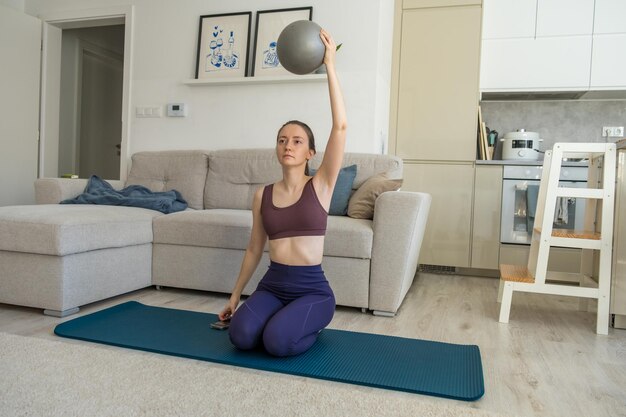
🏠 Within the broader category of fitness, home workouts refers to any structured physical training performed outside a commercial gym or dedicated fitness facility — typically in a living space, backyard, garage, or similar environment. That definition is deliberately wide, because home training spans an enormous range of approaches.
At one end sits bodyweight training: exercises using only the weight of one's own body — push-ups, squats, lunges, planks, pull-ups. At the other end are fully equipped home gyms with barbells, racks, adjustable dumbbells, and cardio machines. Between those extremes lies a wide middle ground of minimal-equipment approaches using resistance bands, kettlebells, a single pair of dumbbells, or suspension trainers.
What distinguishes home training from gym training is not the type of exercise — many movements are identical — but the environment, the available equipment, the level of coaching or supervision, and the constraints (and freedoms) that come with training on your own terms.
How Home Training Produces Fitness Outcomes
The mechanisms through which home workouts drive fitness adaptations are the same ones at work in any training context. Progressive overload — the principle of gradually increasing the demand placed on muscles over time — is the central driver of strength and muscle development, whether that happens with a barbell or a resistance band. Cardiovascular adaptation occurs when the heart and lungs are consistently challenged at sufficient intensity and duration, regardless of whether that happens on a treadmill or during a bodyweight circuit in a living room.
Research comparing bodyweight resistance training with weighted resistance training generally finds that both can produce meaningful gains in strength and muscle mass, particularly for people who are newer to structured training. The picture becomes more nuanced for experienced trainees or those pursuing specific athletic goals — the evidence here is less straightforward, and outcomes depend heavily on how training is programmed and how close to a person's individual limits it pushes them.
For cardiovascular fitness, home-based options range from low-cost (running outdoors, jump rope, cycling) to structured formats like high-intensity interval training (HIIT), which has a reasonably strong body of research supporting its effectiveness for improving aerobic capacity and metabolic markers in relatively short sessions. That said, most HIIT research involves supervised settings, so how findings translate to unsupervised home training varies by individual.
Flexibility and mobility work — stretching, yoga-based movement, and targeted mobility routines — is generally well-suited to home environments and requires little to no equipment. Evidence on optimal protocols for flexibility is more limited and mixed than for strength or cardiovascular training, though consistent practice is broadly associated with improved range of motion over time.
The Variables That Shape What Home Training Delivers
💡 Two people can follow the same home workout program and get genuinely different results. That is not a flaw in the research — it reflects how many factors interact to determine outcomes.
| Variable | Why It Matters |
|---|---|
| Training experience | Beginners typically respond to almost any consistent stimulus; experienced trainees require more specific programming |
| Available equipment | Determines which movements are accessible and how progressive overload can be applied |
| Space and environment | Affects exercise selection, noise constraints, and psychological readiness to train |
| Adherence and consistency | The most effective program delivers no benefit if it isn't followed; home environments affect motivation differently for different people |
| Goals | Muscle growth, fat loss, endurance, mobility, and stress reduction each favor different approaches |
| Recovery factors | Sleep, nutrition, stress, and age all influence how the body responds to training stimulus |
| Programming quality | Randomized, disconnected workouts tend to produce less progress than structured, progressive routines |
| Supervision and form | Without coaching, technique errors can accumulate — relevant especially for injury risk over time |
None of these factors operate in isolation. A person with limited equipment but strong programming knowledge and consistent habits may progress more than someone with a fully equipped home gym following a poorly structured plan.
The Spectrum: Who Home Training Works Differently For
Research on exercise broadly shows that outcomes vary considerably by individual. Within home training specifically, that variation plays out in recognizable patterns — not predictions, but patterns worth understanding.
Beginners to structured exercise often see meaningful progress from home workouts with minimal equipment, because the training stimulus is novel and the threshold for driving adaptation is relatively low. Bodyweight progressions alone can build a foundation of functional strength, cardiovascular fitness, and movement quality.
Intermediate and advanced trainees face a different challenge. As the body adapts, it requires progressively greater demand to continue improving. Home training can meet this challenge — but it typically requires more deliberate programming, creative loading strategies, or investment in equipment to maintain the stimulus needed. For someone pursuing specific strength or hypertrophy goals, the constraints of a minimal home setup become more limiting over time than they would for someone focused on general fitness and health.
People returning from injury or managing chronic conditions represent another distinct profile. Home environments offer privacy and flexibility that can make it easier to train consistently — but the absence of professional oversight is a more significant factor in these contexts. What research shows about exercise and rehabilitation in general does not tell any individual what is appropriate for their specific condition or recovery stage.
People with schedule constraints or social barriers to gym attendance are often the strongest candidates for home-based training, simply because the greatest fitness benefits come from training that actually happens. Accessibility and consistency intersect in ways that are deeply individual.
Key Questions Within Home Workouts
Can You Build Real Strength Without Weights?
This is one of the most searched questions in home training, and the honest answer is: it depends on what "real strength" means for your goals and your current level. Research on bodyweight resistance training consistently shows it can produce meaningful strength gains, particularly through compound movements and progressive variations. The limiting factor tends to be the upper end of loading — a push-up, even a challenging variation, eventually caps out in a way that a loaded barbell does not. How much that ceiling matters is a function of the individual's goals and starting point.
How Should a Home Workout Program Be Structured?
Program structure — the arrangement of training days, movement patterns, intensity, volume, and recovery — is as relevant at home as it is in any other training context. Research on resistance training generally supports training each major muscle group with sufficient frequency and volume, distributed across sessions in a way that allows recovery. What that looks like in practice varies widely by goal, schedule, and experience level.
What Equipment Makes the Biggest Difference?
🔧 The marginal value of equipment depends entirely on the gap between what you have and what your goals require. For many people, a pair of adjustable dumbbells or a set of resistance bands meaningfully expands exercise options and makes progressive overload easier to manage over time. For others, no equipment at all is sufficient for their goals. Articles within this section explore specific equipment categories, what the evidence shows about their utility, and what trade-offs each involves.
How Does Home Training Compare to Gym Training?
Direct comparisons in research are complicated by the fact that gym training and home training are not monolithic — each encompasses enormous variation. Studies generally find that adherence tends to be the stronger predictor of outcomes than training location, though the environments shape adherence differently for different people. The question of which is "better" typically reduces to which one a person will consistently do, at sufficient intensity, over time.
How Do You Stay Consistent Without External Structure?
Behavioral research on exercise adherence identifies several factors that support consistency: clear scheduling, defined goals, social accountability, reducing friction to starting, and building training into existing routines. None of these guarantee adherence, and what works varies substantially by individual. The structural absence of external accountability — a gym, a class, a trainer — is a real factor for some people and a non-issue for others.
What About Injury Risk at Home?
Without professional oversight, form errors can develop undetected, and there is no trainer available to observe, correct, or modify movements in real time. Research on injury in unsupervised training is limited, but the general principle holds: technique matters, and the risk profile of any exercise depends on how it is performed. People managing existing conditions, recovering from injury, or new to movement-based exercise are the groups for whom the absence of guidance is most worth considering.
The landscape of home workouts is genuinely broad — broad enough that the same label covers a beginner doing ten-minute bodyweight routines and an experienced athlete training with a full rack and structured periodization. What the research shows about mechanisms, principles, and general patterns provides a foundation. What it cannot provide is a conclusion about any particular person's situation — that piece requires the individual context that only the reader holds.