How to Avoid Getting Sick on a Plane: What Actually Works
Flying puts your body in an unusual environment — recycled air, close quarters, disrupted sleep, and surfaces touched by hundreds of strangers. It's no surprise that many travelers feel run-down after a flight. But getting sick isn't inevitable. Understanding what actually makes planes a health risk helps you make smarter choices before, during, and after you fly. ✈️
Why Planes Are a Higher-Risk Environment
The cabin isn't as germ-laden as popular belief suggests — but it does create specific conditions that weaken your defenses.
Dry air is one of the biggest culprits. Cabin humidity typically runs much lower than what your respiratory system is used to. This dries out the mucous membranes in your nose and throat, which are your body's first line of defense against airborne particles and pathogens.
Recirculated air sounds alarming, but most modern commercial aircraft use HEPA filtration systems that capture a high percentage of airborne particles, including many bacteria and viruses. The air itself is less of a threat than it's often made out to be.
The bigger risk is surface contact. Tray tables, armrests, seatbelt buckles, and overhead bin handles are high-touch surfaces that may not be thoroughly cleaned between flights. Touching these and then touching your face is a well-established transmission route for respiratory illnesses.
Proximity to other passengers also matters. Sitting near someone who is actively sick — especially within a row or two — does increase exposure risk, though how much depends on the illness, the ventilation pattern in that section of the aircraft, and other variables.
Before You Board: Preparation That Pays Off
What you do before the flight often matters more than what you do on it.
Sleep is non-negotiable. A tired immune system is a compromised immune system. If you're already running on empty before a long-haul flight, your body has less capacity to fight off whatever it encounters in the cabin.
Hydration starts before you arrive at the airport. Flying dehydrated compounds the effects of the dry cabin air, so arriving well-hydrated gives you a head start.
Vaccinations are worth reviewing before international travel in particular. Depending on your destination and travel profile, being current on flu shots and other relevant immunizations can meaningfully reduce risk — though which vaccines matter depends on where you're going and your personal health history, something a travel medicine provider can assess.
Avoid flying when you're already sick, if you can. Your immune system is already occupied, your symptoms can worsen at altitude, and you're more likely to spread illness to others.
During the Flight: Practical Habits That Help 🛡️
Hand Hygiene Is the Highest-Leverage Habit
Wash your hands thoroughly before eating or drinking, and after using the lavatory. When soap and water aren't accessible, an alcohol-based hand sanitizer is a practical substitute. The goal isn't sterility — it's reducing the number of times you touch contaminated surfaces and then touch your eyes, nose, or mouth.
Stay Hydrated Throughout the Flight
Drink water consistently during the flight, not just when you're thirsty. Thirst is a lagging indicator of dehydration. Alcohol and caffeine both have diuretic effects, so they contribute to dehydration rather than hydration — worth knowing if you're on a long flight.
Keeping nasal passages from drying out can also help. Some travelers use saline nasal spray during flights to counteract the dry cabin air. This isn't a medically required step, but it addresses the physiological mechanism that makes dry air a risk factor.
Manage Surface Contact Consciously
Wipe down your tray table and armrests with disinfecting wipes when you sit down. This is a low-effort step with a potentially meaningful payoff. Focus on surfaces you're likely to touch repeatedly or rest your face near.
Avoid touching your face. This is harder than it sounds, but it's genuinely one of the most effective things you can do.
Air Vents: Keep Them On (Not Off)
Counterintuitively, the overhead air vent can actually help. Keeping a low airflow directed downward around you creates a gentle barrier that deflects airborne particles away from your breathing zone. Turning the vent off doesn't protect you — it reduces the circulation benefit the HEPA system provides.
Factors That Vary by Person and Trip
Not everyone faces the same level of risk on a plane. A few variables that shape your actual exposure and resilience:
| Factor | Why It Matters |
|---|---|
| Flight length | Longer flights mean extended exposure and more dehydration accumulation |
| Season and destination | Flying during peak respiratory illness season or to areas with different circulating illnesses changes the risk profile |
| Your baseline health | Underlying conditions, immune status, and current stress levels affect how your body responds |
| Seat location | Aisle seats increase movement and surface contact; window seats may offer slightly more distance from foot traffic |
| Cabin class | More space and less passenger density can reduce proximity exposure, though this isn't a guarantee |
| Age | Young children and older adults may have different vulnerability profiles |
What Masks Do (and Don't Do)
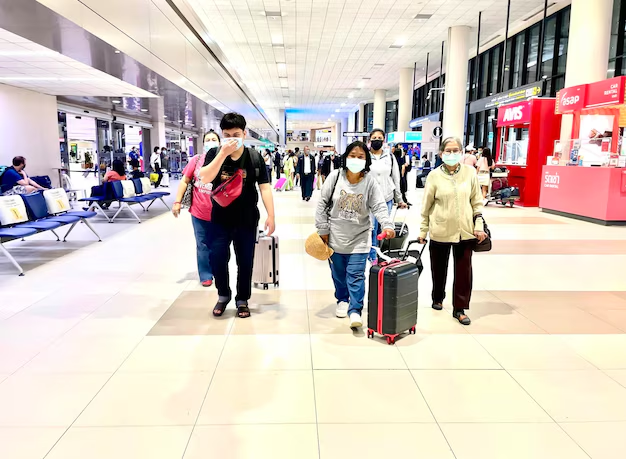
Wearing a well-fitted mask — particularly an N95 or KN95 style — reduces your inhalation of airborne particles to a meaningful degree. How much protection this provides in practice depends on the type of mask, how consistently it's worn, how well it fits your face, and the specific pathogen in question.
Surgical masks and cloth masks offer less filtration, but still provide some barrier, particularly against larger respiratory droplets. The decision to wear a mask is personal and depends on your health situation, risk tolerance, and travel circumstances. Some travelers wear masks routinely on flights; others use them selectively during high-risk seasons or when they're feeling run-down. 😷
Rest, Jet Lag, and Immune Function
Long-haul travel disrupts sleep, and sleep disruption suppresses immune function. This is why travelers often feel fine during a trip but fall ill in the days afterward — the cumulative deficit catches up.
Strategies that help include:
- Adjusting sleep schedules gradually before a long east-west or west-east journey
- Avoiding alcohol on night flights when you're trying to sleep, since it fragments sleep quality even if it helps you fall asleep faster
- Staying in your destination's time zone mentally from the moment you board, if the flight is long enough
How much jet lag affects you and what strategies work best depends heavily on your own physiology, the direction of travel, and the length of your flight.
When to Consult a Travel Medicine Specialist
If you have underlying health conditions, a compromised immune system, or are traveling to regions with specific disease risks, a conversation with a travel medicine physician or your regular healthcare provider before your trip is worthwhile. They can assess your specific profile, recommend appropriate vaccines, and advise on any medications or precautions relevant to your situation.
General tips help most travelers most of the time. But the right approach for your health, your route, and your trip isn't something a general guide can determine — that's where your own healthcare picture matters.