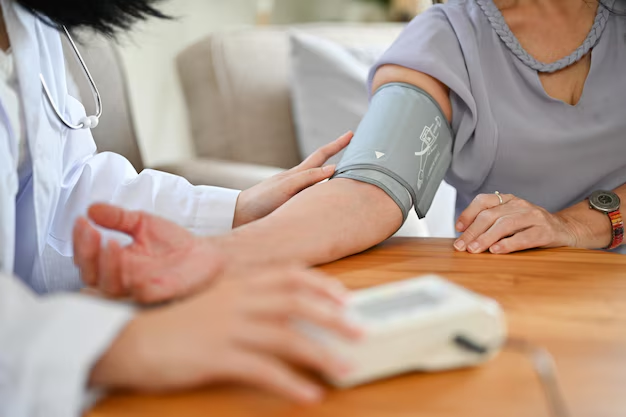
What Is Hypertension and How Dangerous Is It?
Hypertension — commonly called high blood pressure — is one of the most widespread chronic conditions in the world, yet it causes no obvious symptoms in most people. That invisibility is precisely what makes it so risky. Understanding what hypertension actually is, how it develops, and what it can do to your body over time is the foundation for taking it seriously.
What Hypertension Actually Means
Your heart pumps blood through your arteries with every beat. Blood pressure is the force that blood exerts against the walls of those arteries. It's measured as two numbers:
- Systolic pressure — the top number — is the force when your heart beats and pushes blood out.
- Diastolic pressure — the bottom number — is the force when your heart rests between beats.
Both numbers matter. Hypertension is diagnosed when that pressure stays consistently elevated over time — not just during a single stressful moment. A one-time high reading in a doctor's office doesn't automatically mean hypertension; a pattern of elevated readings does.
The Blood Pressure Categories ⚠️
Medical guidelines organize blood pressure into stages to help clinicians and patients understand severity. While exact thresholds can vary slightly by country and guideline version, the general framework looks like this:
| Category | What It Generally Means |
|---|---|
| Normal | Pressure is in a healthy range; heart and arteries aren't under excess strain |
| Elevated | Readings are above ideal but not yet at a hypertension threshold; a warning sign |
| Stage 1 Hypertension | Consistently above normal; lifestyle changes and monitoring are typically priority |
| Stage 2 Hypertension | Significantly elevated; medication is more commonly part of the conversation |
| Hypertensive Crisis | Dangerously high; requires immediate medical attention |
Your doctor interprets where your readings fall — and what they mean for your specific health picture.
Two Types: Primary vs. Secondary Hypertension
Not all hypertension has the same origin, and that distinction shapes how it's managed.
Primary (essential) hypertension is the most common type. It develops gradually over years without a single identifiable cause. It's linked to a combination of genetics, lifestyle, age, and environmental factors.
Secondary hypertension has a specific underlying cause — such as kidney disease, thyroid disorders, sleep apnea, or certain medications. Treating that root cause can sometimes improve or resolve the blood pressure problem. This type tends to develop more suddenly and can be more severe.
Understanding which type someone has is part of what a healthcare provider evaluates during diagnosis.
Why Hypertension Is Called the "Silent Killer" 🩺
Most people with hypertension feel completely normal. There's typically no pain, no obvious warning sign, no moment where your body signals that something is wrong. People can carry elevated blood pressure for years — even decades — without knowing it.
Meanwhile, the damage accumulates. Sustained high pressure forces the heart to work harder and gradually harms the walls of blood vessels throughout the body. That slow, quiet damage is why routine blood pressure screening matters so much.
The Real Dangers: What Hypertension Can Cause
The danger of hypertension isn't usually a dramatic sudden event at the outset — it's the long-term strain it places on vital organs. Over time, uncontrolled high blood pressure is a major contributing factor to:
Heart Disease and Heart Attack
High pressure makes the heart work harder with every beat. The heart muscle can thicken and stiffen over time, making it less efficient. It also accelerates atherosclerosis — the buildup of fatty plaques inside artery walls — which can eventually block blood flow to the heart.
Stroke
When blood vessels in or leading to the brain are under prolonged pressure, they can either rupture (hemorrhagic stroke) or become blocked (ischemic stroke). Both are life-threatening emergencies, and hypertension is one of the leading modifiable risk factors for both.
Kidney Damage
The kidneys are packed with tiny, delicate blood vessels. Persistent high pressure damages them, reducing the kidneys' ability to filter waste. This can progress toward chronic kidney disease — and damaged kidneys can actually worsen blood pressure further, creating a dangerous cycle.
Vision Loss
The small blood vessels of the eyes are vulnerable to pressure damage too. Over time, this can affect vision and, in serious cases, contribute to blindness.
Aneurysm
Sustained high pressure can cause weakened spots in artery walls to bulge outward, forming an aneurysm. If one ruptures, it can be immediately life-threatening.
The severity of these risks isn't identical for everyone. How dangerous hypertension is for any individual depends on factors like how long it's gone uncontrolled, how high the readings are, and what other health conditions or risk factors are present.
What Raises Your Risk of Developing Hypertension?
Several factors influence whether and how severely someone develops high blood pressure:
- Age — blood pressure tends to rise with age as arteries naturally stiffen
- Family history — genetics play a meaningful role
- Weight — carrying excess body weight increases the workload on the cardiovascular system
- Physical inactivity — a sedentary lifestyle is consistently linked to higher blood pressure
- Diet — particularly high sodium intake, low potassium, and excess alcohol
- Chronic stress — may contribute over time, though the relationship is complex
- Smoking — damages blood vessel walls and raises pressure acutely
- Underlying conditions — including diabetes, kidney disease, and sleep apnea
- Race and ethnicity — some populations face higher rates and earlier onset, for reasons that involve both genetic and social factors
No single factor works in isolation. The combination and interaction of these variables shapes each person's risk profile differently.
Can Hypertension Be Managed? 💊
Yes — and that's genuinely important to understand. Hypertension is a serious condition, but it is also one of the most treatable chronic conditions in medicine. Management typically involves some combination of:
- Lifestyle changes — dietary adjustments (including reduced sodium), increased physical activity, weight management, limiting alcohol, and quitting smoking are all well-established tools
- Medication — several classes of blood pressure medications exist, each working through different mechanisms; a healthcare provider determines what's appropriate based on the individual's full health picture
- Monitoring — regular blood pressure checks, whether at a clinic or at home, allow for tracking trends and adjusting treatment as needed
What works for one person may not be the right approach for another. Severity, type of hypertension, age, other health conditions, and medication tolerability all factor into what a realistic management plan looks like.
What You'd Need to Evaluate for Your Own Situation
Understanding the landscape of hypertension is genuinely useful — but what matters most for you personally includes things only a qualified clinician can assess: your actual blood pressure readings over time, your full medical history, any medications you take, and how other health factors interact. If you haven't had your blood pressure checked recently, that's the most practical starting point. High blood pressure announces itself through a number — not through symptoms.