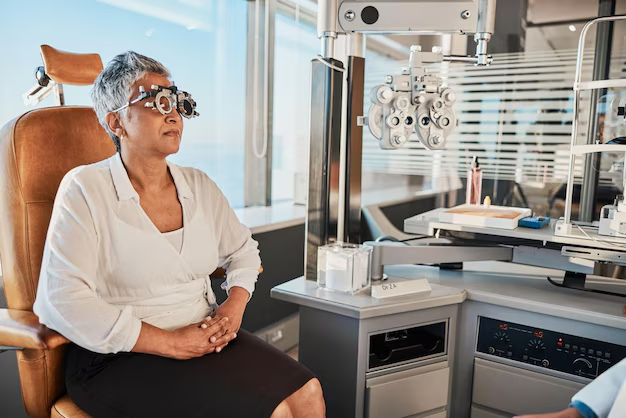
Eye Exams: How Often You Need One and What They Can Detect
Most people schedule an eye exam when something feels wrong — blurry vision, headaches, or trouble reading a screen. But routine eye exams aren't just about updating your glasses prescription. They're one of the few health screenings that can reveal serious conditions before you notice any symptoms at all. Understanding the recommended schedule and what's actually being checked helps you treat this as the preventive tool it is.
What Happens During a Routine Eye Exam?
A comprehensive eye exam is more than a vision test. It typically includes several distinct evaluations:
- Visual acuity testing — measures how clearly you see at various distances
- Refraction assessment — determines whether you need corrective lenses and, if so, what prescription
- Eye pressure measurement (tonometry) — screens for elevated intraocular pressure, which can indicate glaucoma
- Dilated eye exam — drops widen the pupil so the doctor can examine the retina, optic nerve, and blood vessels at the back of the eye
- Slit-lamp examination — uses a microscope-like instrument to examine the front structures of the eye, including the cornea, lens, and iris
- Eye muscle and alignment testing — checks how well both eyes work together and track movement
Not every visit includes every component. What's performed depends on your age, symptoms, health history, and what your eye care provider considers appropriate for your situation.
How Often Should You Get an Eye Exam? 👁️
There's no single universal schedule — it depends on your age, risk factors, and whether you have vision correction needs or known eye conditions.
General guidelines by life stage:
| Age Group | General Recommendation |
|---|---|
| Infants and toddlers | First eye screening in the first year of life; again around age 3 |
| School-age children | Before starting school; then every 1–2 years or as recommended |
| Adults (18–64, low risk) | Every 1–2 years if you wear glasses or contacts; every 2 years if you have no vision issues |
| Adults 65 and older | Annually, or as directed by an eye care provider |
These are general frameworks, not mandates. They reflect guidance from major optometric and ophthalmologic organizations, but your own provider may recommend something different based on your health profile.
Factors that can mean more frequent exams:
- Diabetes — can cause diabetic retinopathy, which damages blood vessels in the retina; many people with diabetes are advised to have annual dilated exams
- High blood pressure — affects blood vessels throughout the body, including in the eyes
- Family history of glaucoma or macular degeneration — significantly increases risk
- Current eye conditions — such as glaucoma, dry eye disease, or cataracts
- Wearing contact lenses — typically requires annual exams to monitor eye health and update the lens fit or prescription
- Certain medications — some drugs have ocular side effects that warrant closer monitoring
- A history of eye injury or surgery
If any of these apply to you, the right frequency is something to establish with your eye care provider directly.
What Can an Eye Exam Detect Beyond Vision Problems?
This is where routine eye exams earn their place in preventive health — not just vision care. The eye is the only place in the body where blood vessels and nerve tissue can be examined directly without any cutting or imaging technology. That makes the eye a useful window into overall health.
Conditions that can be detected or flagged during an eye exam:
Glaucoma Often called the "silent thief of sight," glaucoma typically causes no pain or obvious symptoms until significant vision loss has occurred. Eye pressure measurement and optic nerve evaluation can catch it early — when treatment is most effective.
Diabetic Retinopathy High blood sugar over time damages retinal blood vessels. A dilated exam can detect early signs of this condition even before a person knows their blood sugar is problematic. For people already diagnosed with diabetes, this exam helps monitor progression.
Hypertensive Retinopathy Chronic high blood pressure can leave visible marks on the blood vessels inside the eye. An eye exam may be the first place this pattern is noticed.
Age-Related Macular Degeneration (AMD) This condition affects central vision and becomes more common with age. Routine exams can identify early structural changes in the macula, the central part of the retina, before vision loss becomes noticeable.
Cataracts A cataract is a clouding of the eye's natural lens. They develop gradually, and many people don't realize how much their vision has changed until an exam reveals it clearly. Early detection helps with planning and monitoring.
Multiple Sclerosis and Neurological Conditions The optic nerve can show signs of inflammation or damage associated with neurological conditions. Optic neuritis, for example, is sometimes the first sign that prompts investigation for MS.
Thyroid Disease Certain thyroid conditions, particularly Graves' disease, can cause changes in the appearance and movement of the eyes that a trained examiner may notice.
Certain Cancers Intraocular melanoma and other tumors, though rare, can be found during a dilated exam. Leukemia and lymphoma can also produce changes in the eye that may be detected.
Comprehensive Exam vs. Vision Screening: What's the Difference?
These two terms get conflated, but they're not the same thing. 🔍
A vision screening is a basic pass/fail check — typically the kind done at a school, pediatrician's office, or DMV. It's designed to catch obvious problems that warrant follow-up. It is not a substitute for a comprehensive exam.
A comprehensive eye exam is performed by an optometrist (OD) or ophthalmologist (MD or DO) and involves a full evaluation of eye health, not just sharpness of vision. It's the version that can detect the conditions described above.
If you've only ever had screenings — or if your last comprehensive exam was years ago — that distinction matters.
What Affects Whether You Need an Ophthalmologist or Optometrist?
For most routine comprehensive exams, either can provide appropriate care. The distinction becomes more relevant in specific situations:
- Optometrists are licensed to perform comprehensive exams, diagnose common conditions, prescribe corrective lenses, and in most states, prescribe certain medications
- Ophthalmologists are medical doctors who handle surgical interventions (like cataract surgery or glaucoma procedures), complex eye disease management, and cases that require specialist-level care
Some people see both — an optometrist for routine care and an ophthalmologist for a specific condition being managed. Your primary care doctor can help direct you if there's a question about which type of provider fits your situation.
What to Tell Your Eye Doctor 🩺
Getting the most from an exam means giving your provider the right context. Come prepared to share:
- Your personal and family medical history, especially diabetes, hypertension, or eye disease
- Any medications you take, including over-the-counter drugs and supplements
- Changes you've noticed — even subtle ones like increased glare at night, floaters, or eye strain
- How long it's been since your last exam and what (if anything) was noted
The more your provider knows about you, the more targeted and useful the evaluation will be. That context is also what determines whether the general scheduling guidelines apply to you — or whether your situation calls for something different.
The Bottom Line on Frequency and Purpose
Routine eye exams sit at an unusual intersection in preventive health: they protect your vision and can surface early signs of systemic disease. How often you need one depends on your age, health history, risk factors, and whether you use corrective lenses. What gets detected depends on what's being checked and what's actually present.
The general schedules above give you a starting framework. Whether that framework fits your life — or whether your circumstances warrant more frequent care — is a conversation worth having with a qualified eye care provider.